
Malasadas are a delightful treat that originated from the Portuguese, bringing joy to those who enjoy sweet fried pastries. These fluffy, golden-brown fried dough balls are coated in sugar, making them a perfect indulgence for any time of day. Known for their light texture and sweet flavor, malasadas are especially popular in Hawaii, where they have become a beloved cultural staple. Whether enjoyed plain or filled with a variety of delicious fillings, these sweet treats never fail to satisfy cravings.
Why You’ll Love This Malasadas
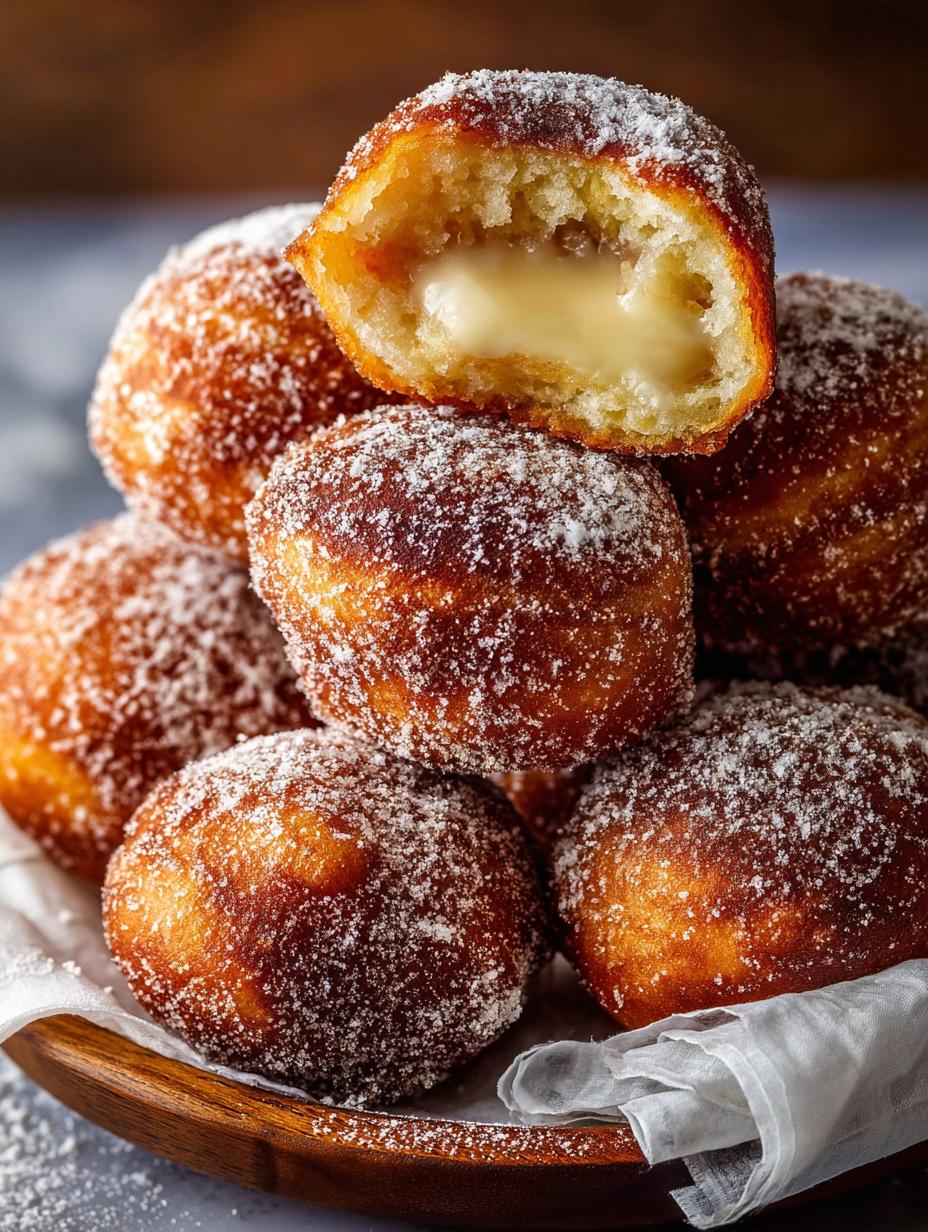
There are countless reasons to love this malasada recipe. First and foremost, they are incredibly soft and fluffy, melting in your mouth with each bite. Made with traditional malasada ingredients like enriched dough and sugar, these treats are a true delight. The versatility of malasadas means you can enjoy them plain or with various fillings like custard or fruit jams. Their appeal extends beyond taste; they are a fun and interactive treat to make with friends and family, perfect for gatherings or celebrations. Furthermore, mastering how to make malasadas opens the door to exploring malasada variations around the world, allowing you to experience global culinary traditions.
Ingredients for Malasadas
Gather these items:
- 2¼ teaspoons active dry yeast (1 packet)
- 1 tablespoon sugar
- ¼ cup lukewarm water (95°-105°F)
- 4 cups all-purpose flour
- ½ cup sugar
- ½ teaspoon salt
- 1 cup lukewarm milk
- 4 large eggs, beaten
- Oil for frying (vegetable or canola oil recommended)
- 1 cup sugar (for coating)
How to Make Malasadas Step-by-Step
- Step 1: In the bowl of your mixer, combine the active dry yeast, 1 tablespoon of sugar, and ¼ cup of lukewarm water. Mix with a dough hook or paddle attachment. Let rest for 5 minutes until the mixture is frothy on top, indicating the yeast is active. If it doesn’t froth, start over with fresh yeast.
- Step 2: Add the all-purpose flour, ½ cup sugar, salt, lukewarm milk, and beaten eggs to the yeast mixture. Mix using the dough hook attachment for 5 to 8 minutes until the dough pulls away cleanly from the sides of the bowl. If the dough is too sticky, add flour by the tablespoon until it is soft and smooth.
- Step 3: Place the dough into a lightly greased bowl, cover with a towel or plastic wrap, and let it rise in a warm, draft-free place until doubled in size, approximately 1 to 1½ hours.
- Step 4: Punch down the dough to release air. Transfer it to a floured surface and roll it into a 9×12-inch rectangle. Cut the dough into 12 equal pieces and place them on a baking sheet lined with parchment paper.
- Step 5: Cover the dough pieces with a clean towel and let them rise again for about 30 minutes. If you prefer smaller malasadas, cut the pieces in half before this step.
- Step 6: Heat oil in a large Dutch oven or heavy-duty pot over medium heat until it reaches 350°F. Fry 3 to 4 dough pieces at a time without overcrowding, turning after 1 to 2 minutes per side, until they are puffed and golden brown.
- Step 7: Transfer the fried malasadas to a plate or bowl lined with paper towels to absorb excess oil.
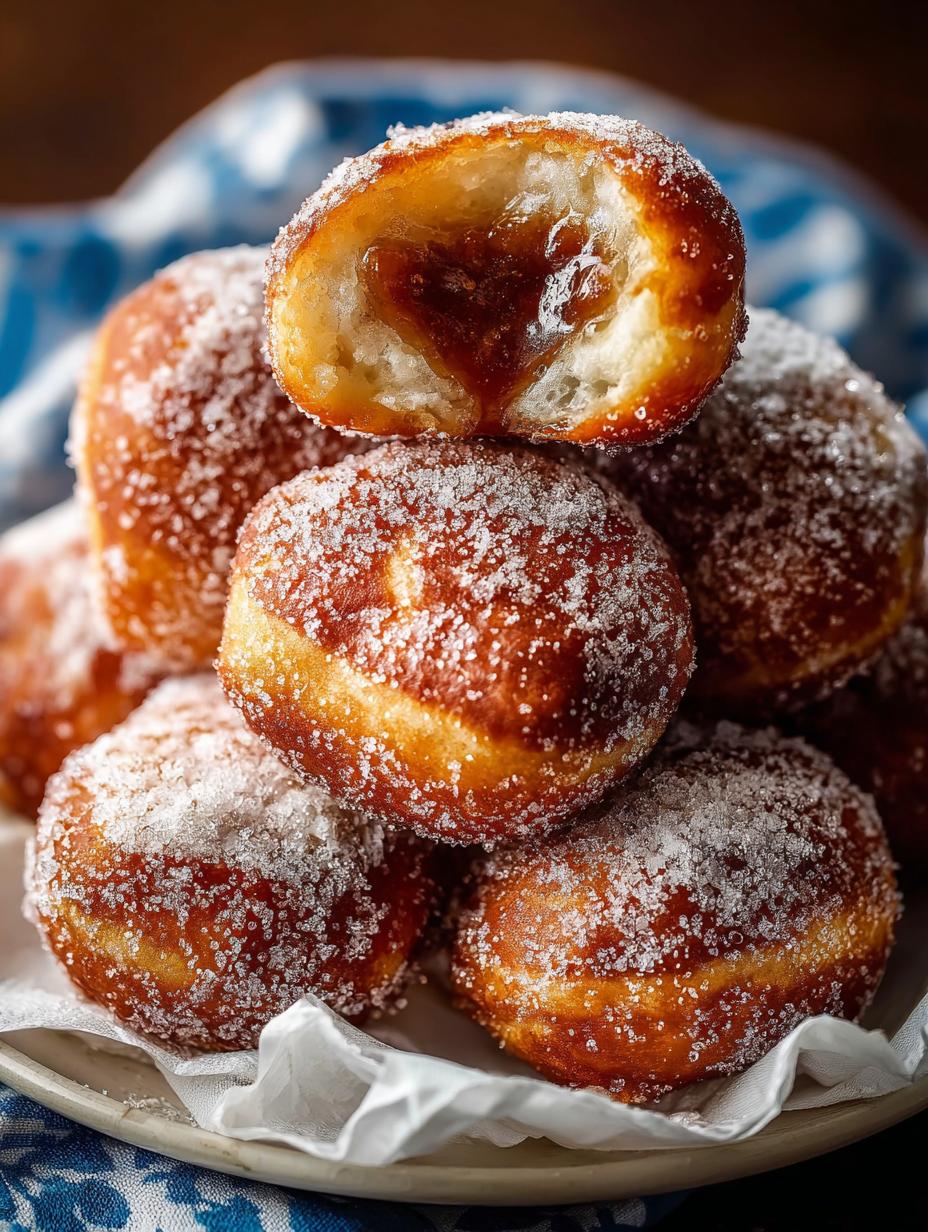
- Step 8: Roll the warm malasadas in sugar until fully coated. Serve plain or with your favorite jams, lemon curd, custard, or dulce de leche for added flavor.
Pro Tips for the Perfect Malasadas
Keep these in mind:
- Enjoy them warm for the best taste.
- Store leftovers in an airtight container.
- They can be reheated in the oven for a few minutes.
- For a fun twist, experiment with different malasadas filling options like chocolate or fruit preserves.
Best Ways to Serve Malasadas
There are many ways to enjoy your malasadas! Serve them warm, rolled in sugar, and accompanied by various dips like lemon curd or custard. They are also delightful when paired with a hot cup of coffee or tea, making them an excellent choice for breakfast or an afternoon snack. Explore malasada serving suggestions and impress your guests with this delightful treat.
How to Store and Reheat Malasadas
To keep your malasadas fresh, store them in an airtight container at room temperature. They are best enjoyed within a day or two. If you have leftovers, you can reheat them in the oven for a few minutes to restore their soft texture and warmth. This method is perfect for meal prep, ensuring you have delicious malasadas ready to enjoy anytime.
Frequently Asked Questions About Malasadas
What are malasadas made of?
Malasadas are primarily made from a yeasted dough that includes flour, sugar, milk, and eggs. This combination creates the fluffy, light texture that makes them irresistible. They are then fried to achieve a golden-brown exterior, making them a delicious treat.
Can I make malasadas ahead of time?
Yes, you can prepare the dough ahead of time. After the first rise, you can refrigerate the dough until you’re ready to fry the malasadas. Just allow the dough to come to room temperature before frying.
How do I avoid common mistakes with malasadas?
To avoid common mistakes, ensure your yeast is fresh and active by checking for froth after mixing with water and sugar. Additionally, monitor the frying temperature closely to achieve the perfect golden-brown color without burning.
Variations of Malasadas You Can Try
Explore different malasada variations around the world. You can try adding different flavors to the dough, such as vanilla or cinnamon, or experiment with fillings like chocolate, cream, or fruit preserves. Each variation offers a unique twist on this beloved treat.
For more information on the history of malasadas, check out this article. If you want to learn more about Portuguese cuisine, visit this resource.
For more about me, visit my About Me page. You can also check out my Privacy Policy for more information.
Print
Malasadas: 12 Irresistibly Delicious Portuguese Donuts
- Total Time: 2 hours 35 minutes
- Yield: 12 malasadas 1x
- Diet: Vegetarian
Description
Delicious Malasadas Recipe
Ingredients
- 2¼ teaspoons active dry yeast (1 packet)
- 1 tablespoon sugar
- ¼ cup lukewarm water (95°-105°F)
- 4 cups all-purpose flour
- ½ cup sugar
- ½ teaspoon salt
- 1 cup lukewarm milk
- 4 large eggs, beaten
- Oil for frying (vegetable or canola oil recommended)
- 1 cup sugar (for coating)
Instructions
- In the bowl of your mixer, combine the active dry yeast, 1 tablespoon of sugar, and ¼ cup of lukewarm water. Mix with a dough hook or paddle attachment. Let rest for 5 minutes until the mixture is frothy on top, indicating the yeast is active. If it doesn’t froth, start over with fresh yeast.
- Add the all-purpose flour, ½ cup sugar, salt, lukewarm milk, and beaten eggs to the yeast mixture. Mix using the dough hook attachment for 5 to 8 minutes until the dough pulls away cleanly from the sides of the bowl. If the dough is too sticky, add flour by the tablespoon until it is soft and smooth.
- Place the dough into a lightly greased bowl, cover with a towel or plastic wrap, and let it rise in a warm, draft-free place until doubled in size, approximately 1 to 1½ hours.
- Punch down the dough to release air. Transfer it to a floured surface and roll it into a 9×12-inch rectangle. Cut the dough into 12 equal pieces and place them on a baking sheet lined with parchment paper.
- Cover the dough pieces with a clean towel and let them rise again for about 30 minutes. If you prefer smaller malasadas, cut the pieces in half before this step.
- Heat oil in a large Dutch oven or heavy-duty pot over medium heat until it reaches 350°F. Fry 3 to 4 dough pieces at a time without overcrowding, turning after 1 to 2 minutes per side, until they are puffed and golden brown.
- Transfer the fried malasadas to a plate or bowl lined with paper towels to absorb excess oil.
- Roll the warm malasadas in sugar until fully coated. Serve plain or with your favorite jams, lemon curd, custard, or dulce de leche for added flavor.
Notes
- Enjoy them warm for the best taste.
- Store leftovers in an airtight container.
- They can be reheated in the oven for a few minutes.
- Prep Time: 1 hour
- Cook Time: 35 minutes
- Category: Dessert
- Method: Frying
- Cuisine: Portuguese
Nutrition
- Serving Size: 1 malasada
- Calories: 220
- Sugar: 11g
- Sodium: 180mg
- Fat: 8g
- Saturated Fat: 1g
- Unsaturated Fat: 7g
- Trans Fat: 0g
- Carbohydrates: 33g
- Fiber: 1g
- Protein: 5g
- Cholesterol: 40mg